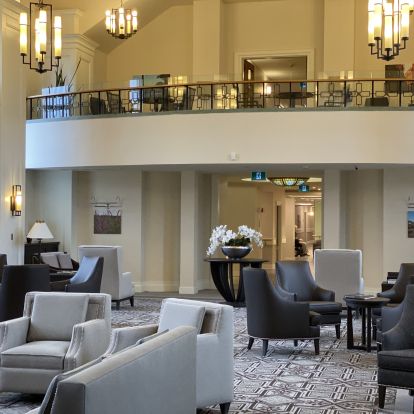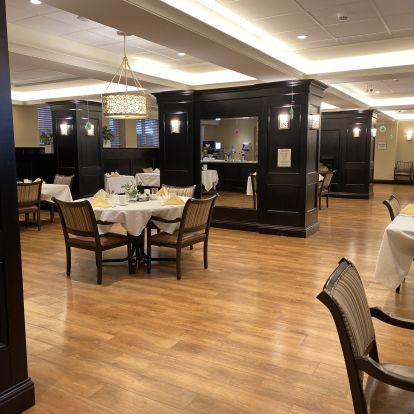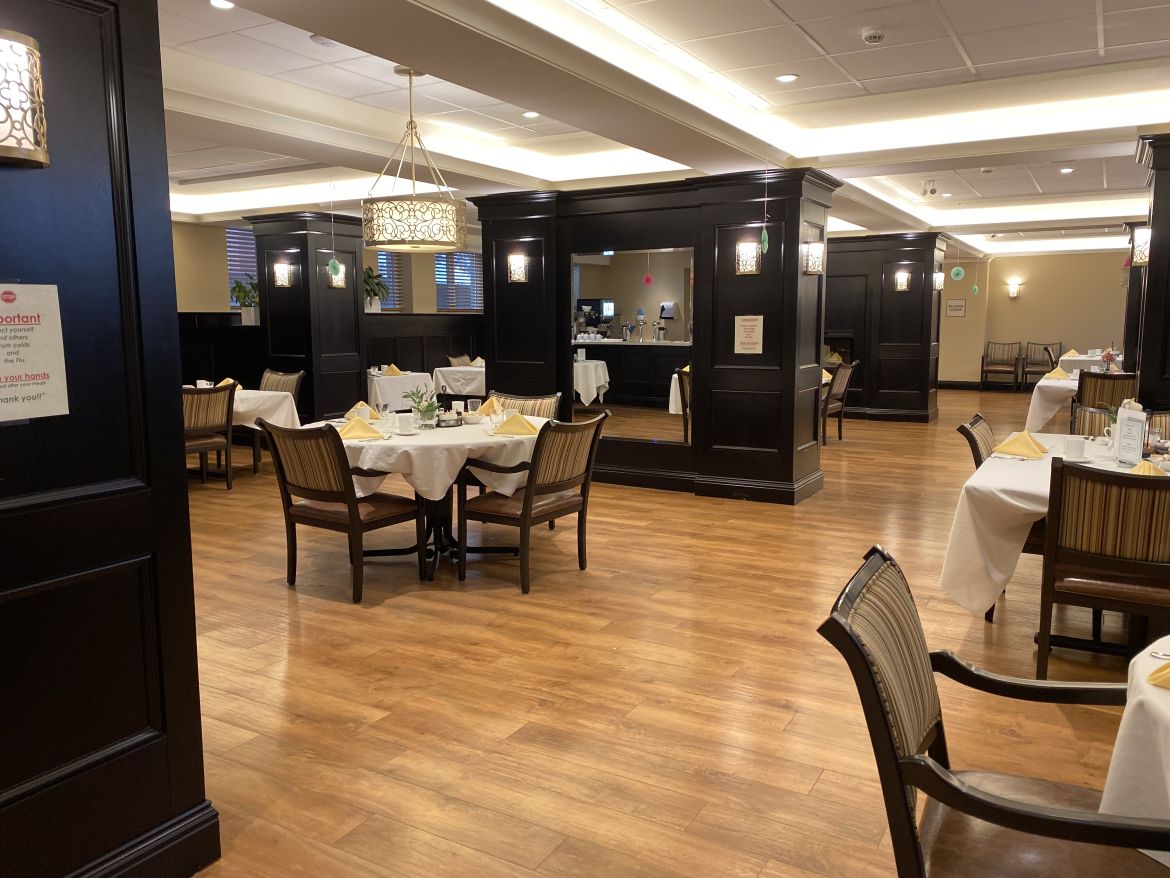

The KHSC Alternate Health Facility (AHF), formerly the Transitional Care Unit, is a 120-bed unit located inside the Windsor Retirement Residence, 20 minutes from Kingston, in Amherstview.
Supporting patients after acute care
The AHF is designed as a place for patients who are medically stable and no longer in need of acute care services, but who may still need time, care, and therapy following an acute care episode or emergency department diversion.
For people who need an Alternate Level of Care (ALC) after they no longer need the complex care provided by KHSC’s Kingston General Hospital (KGH) site, the AHF offers accommodation in double-occupancy rooms with a shared bathroom per room and access to restorative therapies as well as nursing and personal care support.
Key features
- 24/7 nursing care
- Medical care provided by KHSC credentialed physician and nurse practitioners
- Personal support care
- Physical therapy
- Recreation therapy
- Social Work
- Registered Dietitian
- Occupational Therapy
- Spiritual Care
- Pharmacy
- Library
- Indoor spaces in which to relax and activities
- Outdoor spaces to enjoy
- Three meals and two snacks served and prepared by onsite kitchen staff
- Transportation to medical appointments
- Required medical supplies, devices and equipment
Why moving out of an acute care hospital matters
Most people need the highly specialized services of an acute care hospital for only a short period of time. Once their acute medical needs have been met, continuing to stay in an acute care environment can slow recovery rather than support it.
Transitioning to a care setting like the Alternate Health Facility offers important benefits:
A better environment for healing
Acute care hospitals are designed for people who need fast, intensive medical treatment. This environment can be busy, noisy, and focused on rapid response. The AHF setting is quieter and more home‑like, allowing people to rest, regain strength, and focus on recovery.
Lower risk of hospital‑related complications
Staying longer than medically necessary in an acute care hospital can increase the chance of certain complications related to immobility and limited activity, such as muscle weakness, reduced balance, and skin breakdown. AHF promotes safe movement, therapy, and daily routines that help prevent these issues. People who receive care at the AHF are more than 50 per cent less likely to be readmitted to hospital within 30 days of leaving the hospital, compared to all other discharged inpatients.
Support to stay active and independent
Functional decline can start quickly when someone is in a hospital bed for long periods. At the AHF, daily activities, restorative exercises, and supported mobility help people rebuild their strength and confidence so they can return home or move to their next stage of care with greater independence.
More opportunities for cognitive stimulation
A change of setting, meaningful activities, and regular social interaction can help maintain or even improve cognitive health. AHF offers recreation therapy, social engagement, and a structured daily routine that supports mental well‑being.
Care tailored to the next stage of recovery
The focus in the AHF is on rehabilitation, stabilization, and preparing for the future—whether that is returning home, moving to long‑term care, or entering another supportive program. The care team works with each person and their family to set goals and make plans that fit their needs.
Improving patient outcomes Improved flow and access to care across the region
Before the AHF opened in 2017 (originally as the TCU), up to 30 per cent of KGH site beds were occupied by people who no longer needed hospital-level care but could not leave the hospital for a variety of reasons.
This contributes, in part, to the hallway medicine crisis, as tertiary hospital organizations like KHSC work to provide the highest level of care to more patients across a large area.
Since its inception, the AHF has enabled KHSC to free-up close to 100,000 days of hospital-bed use to care for the sickest patients in southeastern Ontario.
As well, ALC occupancy has been reduced by 50 per cent, and has been as low as 13 per cent.On average, people stay in the AHF 47 days for restorative therapies or 130 days while waiting to transition to long-term care.
Explore the experiences of people who have received care at the AHF
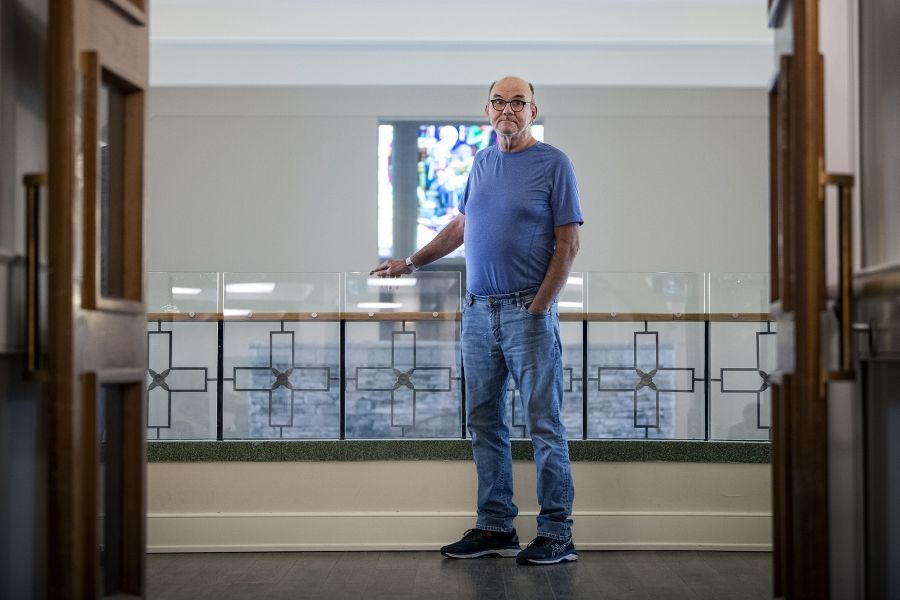
Standing tall at the Transitional Care Unit
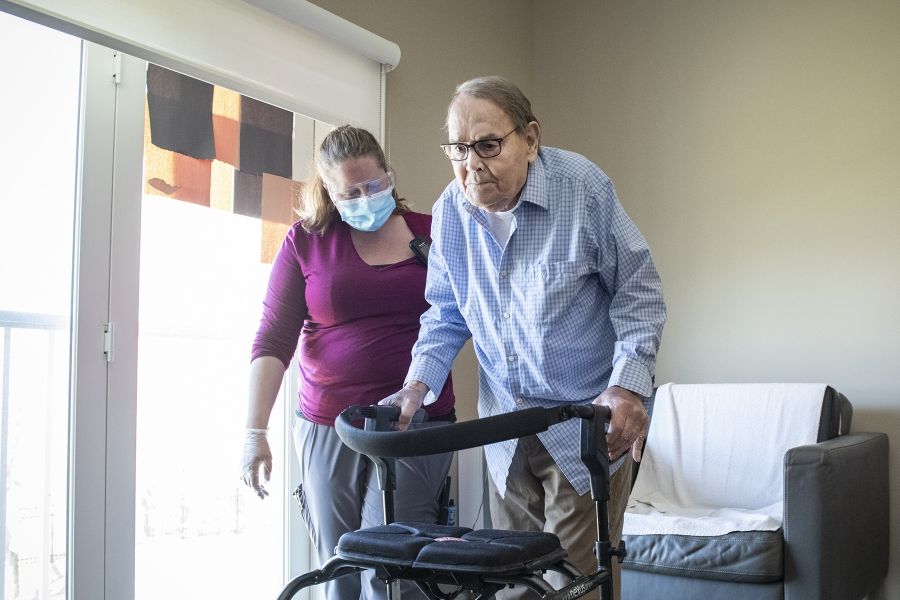
Transitional Care Unit grows again
Changes in AHF operations
Since 2017, KHSC has operated the facility in partnership with Bayshore HealthCare, and in June 2026, both mutually determined that KHSC will assume full and direct operation of the facility starting on Oct. 1, 2026. While KHSC has always been closely involved in care at the facility, after the transition, it will directly operate the facility and all services provided there.
This transition will strengthen connections between the AHF and KHSC's other hospital programs and services, helping support smoother transitions, better coordination of care and enhanced services.s KHSC assumes full operation of the Alternate Health Facility (AHF) on Oct. 1, patients can expect continuity in their care, along with several service enhancements.
- Care will continue without interruption. The AHF will continue providing care for patients who no longer require acute hospital care but are not yet ready to return home or move to another care setting.
- You may see new members of your care team. Patients will have access to additional supports, including a dedicated dietitian, occupational therapist, and expanded social work services.
- Nurse Practitioner (NP) coverage is being enhanced. Increased NP staffing and oversight will help support timely care and clinical decision-making.
- Clinical leadership is being strengthened. Additional charge nurse coverage and clearer processes for accessing medical support will help ensure patients receive the care they need when they need it.
- Medication management will align more closely with hospital practices. Some over-the-counter vitamins, supplements, and non-prescription products may no longer be routinely supplied by the facility. Patients who take these products should speak with their care team. In some cases, patients may be able to continue using their own supply if it is approved as part of their care plan.
- Nutritional support is expanding. Patients will continue to receive meal services, with dedicated dietitian support available to assess and support individual nutritional needs.
- More support will be available for care planning and transitions. Expanded social work resources will help patients and families navigate discharge planning, community supports, and next steps in care.
- The AHF will be more closely integrated with KHSC programs and services. This will help improve coordination of care and support smoother transitions between care settings.
If you have questions about your care or any of these changes, please speak with a member of your care team.
Family and caregiver support
The AHF provides an excellent environment for friends and family to support their loved ones in their care journey. Members of patient support networks are welcome and encouraged to visit the AHF. To learn more about visiting, contact the AHF administration clerk at the information listed below.
Patient relations
If you have a compliment or concern regarding your or your loved one’s experience at the AHF, please contact Patient Relations by phone at 613-549-6666 ext. 64158 or toll free at 1-800-567-5722 ext. 64158 or by email at @email. Office hours are Monday to Friday during regular business hours, excluding statutory holidays
Contact
Phone - (613) 389-8989
Admin Fax - (613) 900-0709
Referral Fax - (613) 417-0774