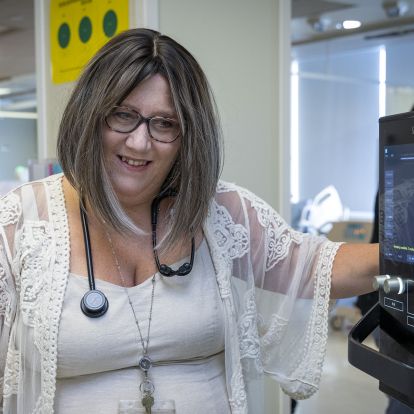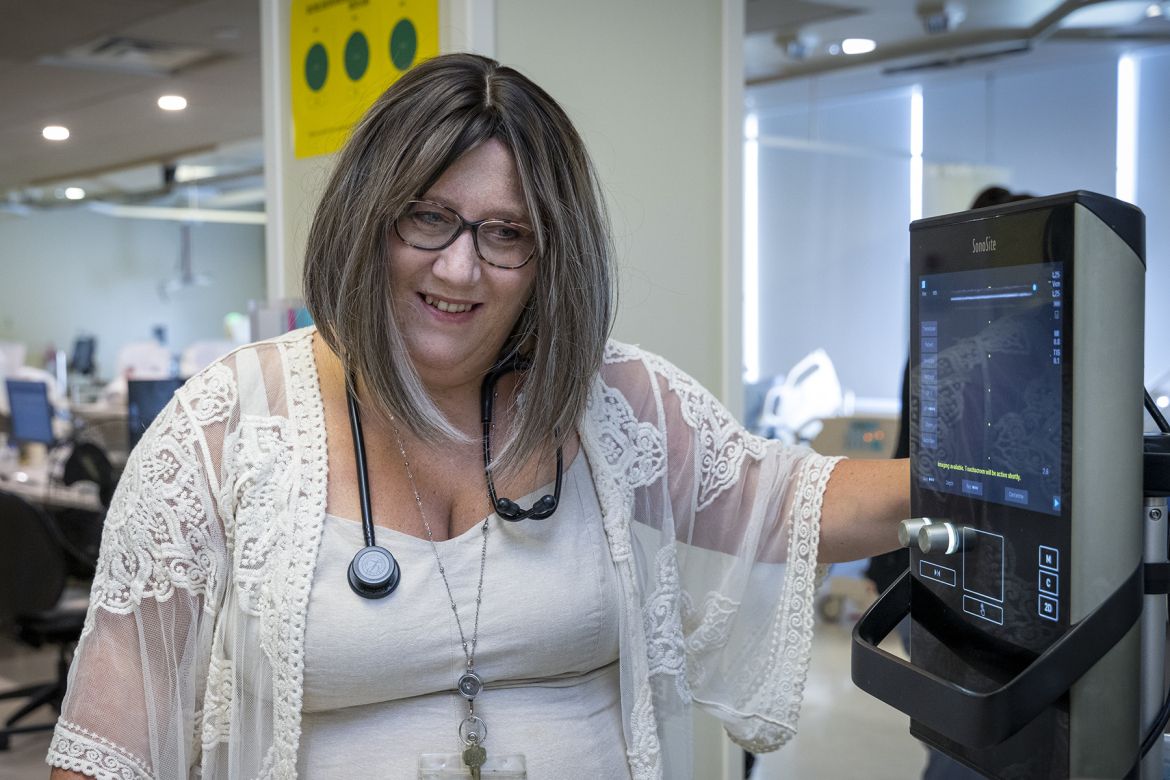

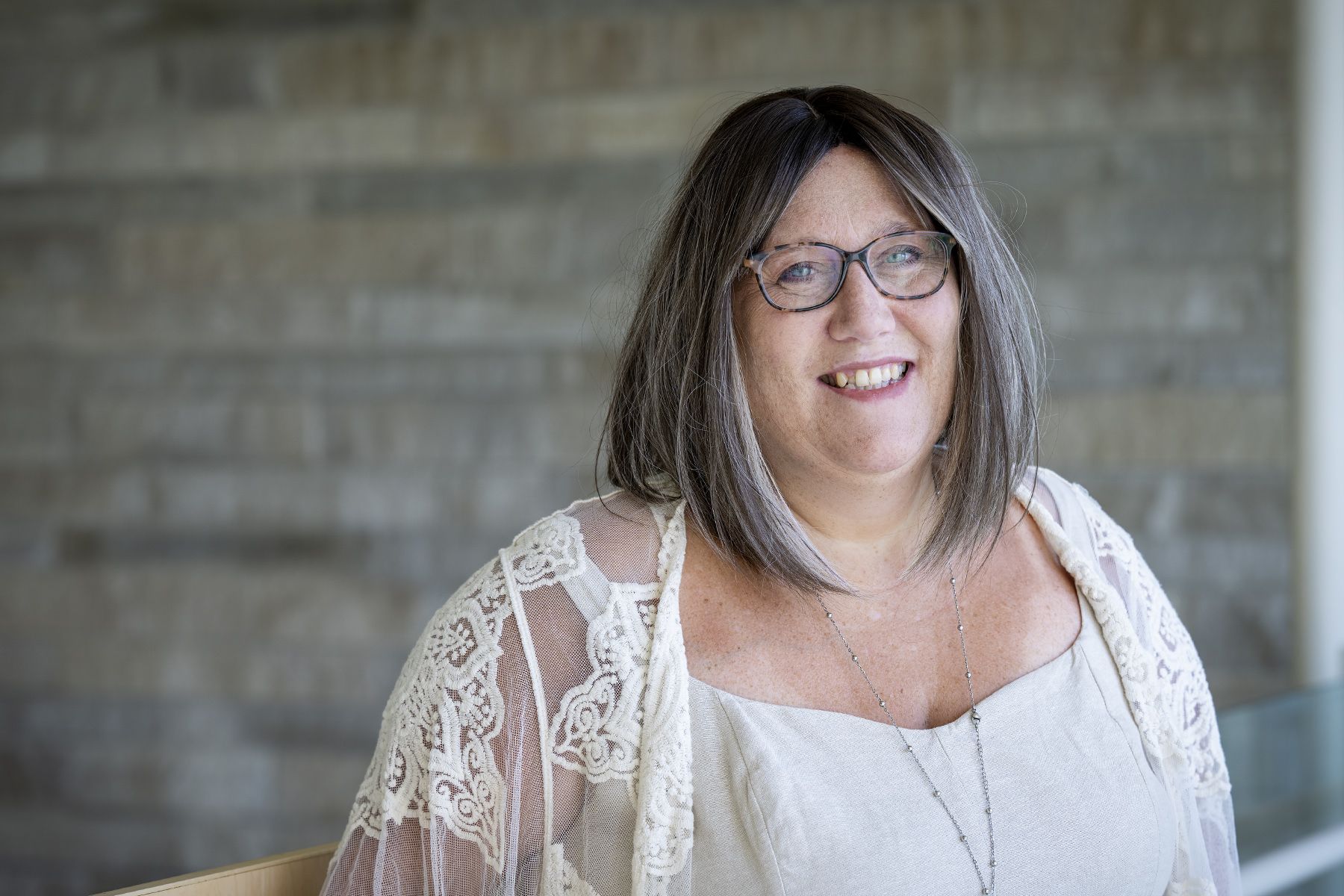
If you've received kidney care through KHSC over the past decade, there's a good chance you've met Kim Turcotte.
As KHSC's Vascular Access Coordinator, Kim is often one of the first people patients meet when dialysis becomes a possibility, and one of the few people they'll continue to see throughout their care journey.
"My job starts from the beginning," she says. "We start talking about the process of getting their dialysis access. Once patients actually start treatment, if there are issues that require surgery or radiological intervention, I coordinate that too."
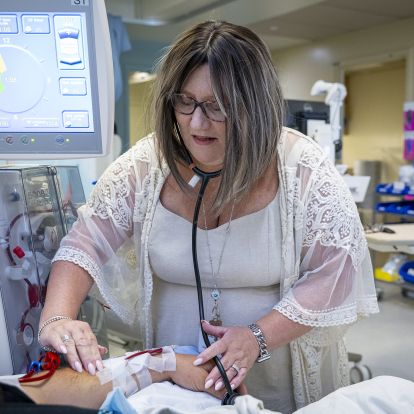
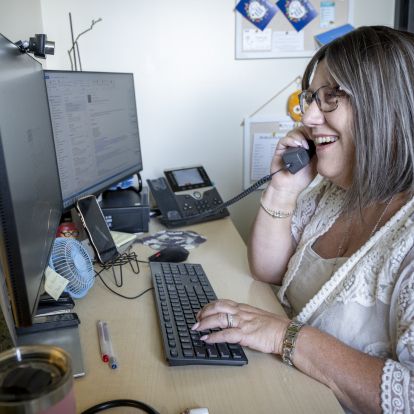
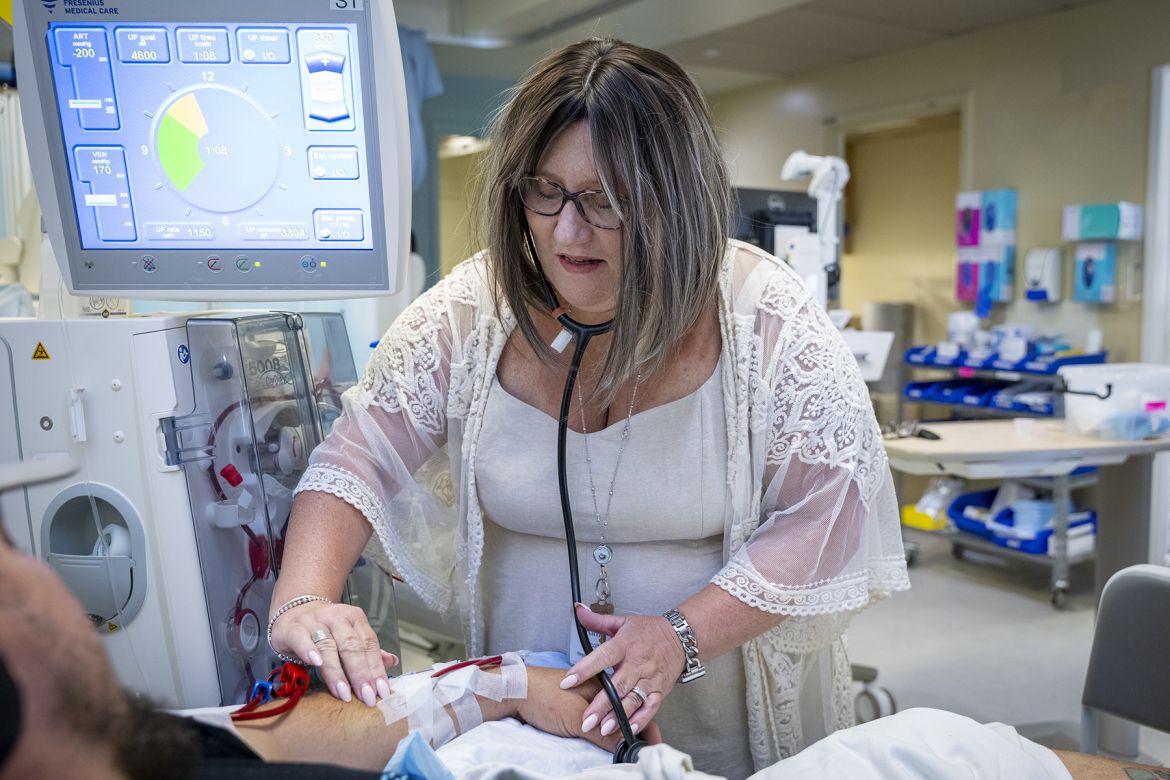
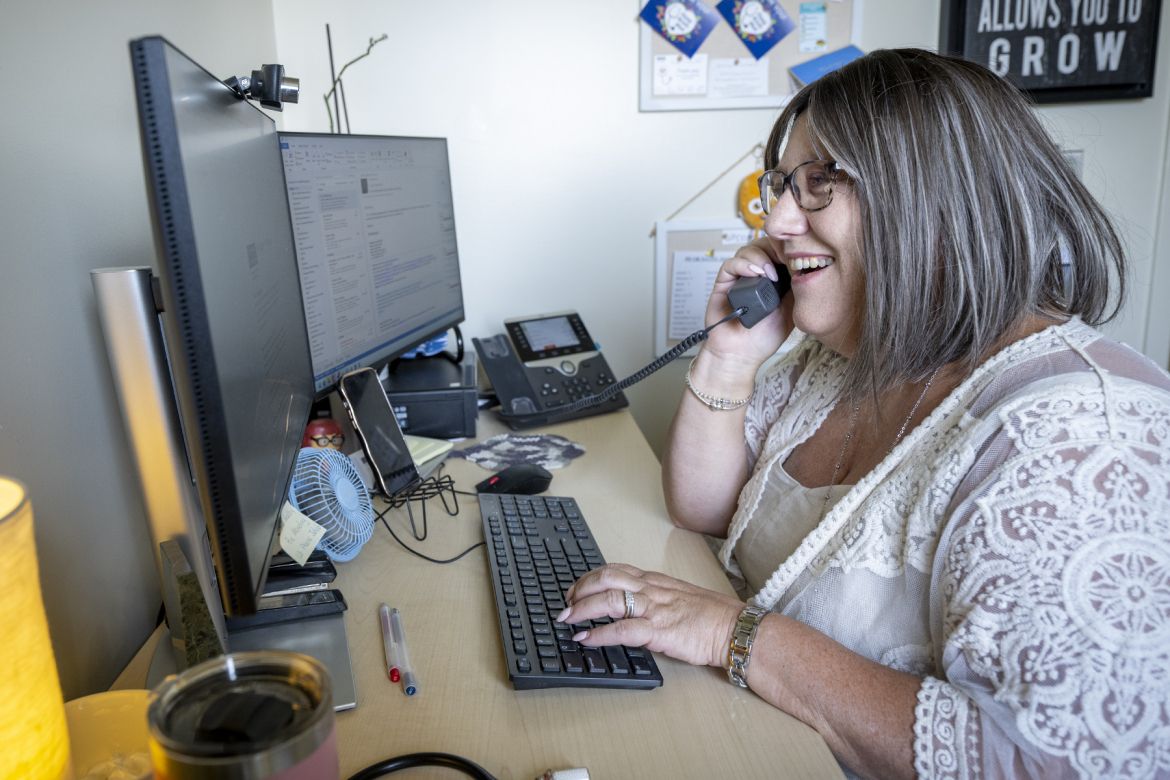
Her days are split between the clinic and her desk, preparing patients for procedures, checking dialysis accesses with ultrasound, coordinating with surgeons and interventional radiology, and answering a steady stream of patient calls and emails.
But for Kim, the technical side of the role is only part of the job.
A cornerstone of my practice is making that connection personal. I try to take some of the burden and worry from them and let them know I'm going to get them through to the next step.
Patients with chronic kidney disease often spend years with KHSC’s Renal (kidney care) Program, first trying to delay the need for dialysis, then receiving treatment and, for some, preparing for a transplant. Over her 11 years in this role, Kim has become a familiar face for nearly every patient who comes through the program.
Almost every single patient comes across my desk at some point. Because I've been in contact with them and been a part of their care, I become a familiar face, and someone patients can trust.
That consistency helps patients navigate what can at times feel like an overwhelming journey.
"I've always said information is very powerful," she says. "You don't give them everything at once. I tell them, 'This is the first step in our journey together. We'll get through that, and then we'll focus on the next step.'"
It's a philosophy rooted in the same reasons for why she became a nurse more than 30 years ago.
Kim began her career in medical-surgical nursing. After joining the Renal Program in 2003, she worked as a beside hemodialysis nurse and then charge nurse. When the Vascular Access Coordinator role expanded into a full-time position in 2015, it allowed her to combine her surgical experience with the long-term relationships she'd built in kidney care.
What drew me to renal was going back to the basic premise of why I became a nurse: to care for people, not necessarily their illness. It's about caring for that person and their family as a whole, and looking at the big picture.
Helping patients see beyond their diagnosis is one of the most meaningful parts of her work.
"I tell people dialysis does not have to be their life," she says. "It's a means to allow them to live the life they choose outside of their illness. A lot of people think, 'My life is over.' I want them to know they're not doing this alone."
For Kim, that's what nursing has always been about: making a difficult journey a little less overwhelming, one step at a time.
Gallery