
Sarina Cormier recently travelled to Portugal to learn how to surf. She came home with something far greater than memories made during an unforgettable adventure. She has a renewed perspective on what’s possible for her own future.
The KHSC manager of Admitting, Registration, Patient Flow and Switchboard is legally blind due to a progressive eye condition. Looking for an adventure that would push her outside her comfort zone, she signed up for Surf Without Sight, an adaptive surfing camp where people with vision loss learn to ride the waves.
After plenty of research—and a healthy dose of courage—Sarina packed her bags and headed to Portugal, unsure exactly what to expect. What she discovered there would change the way she thinks about resilience and her own abilities.
Learning to trust the waves

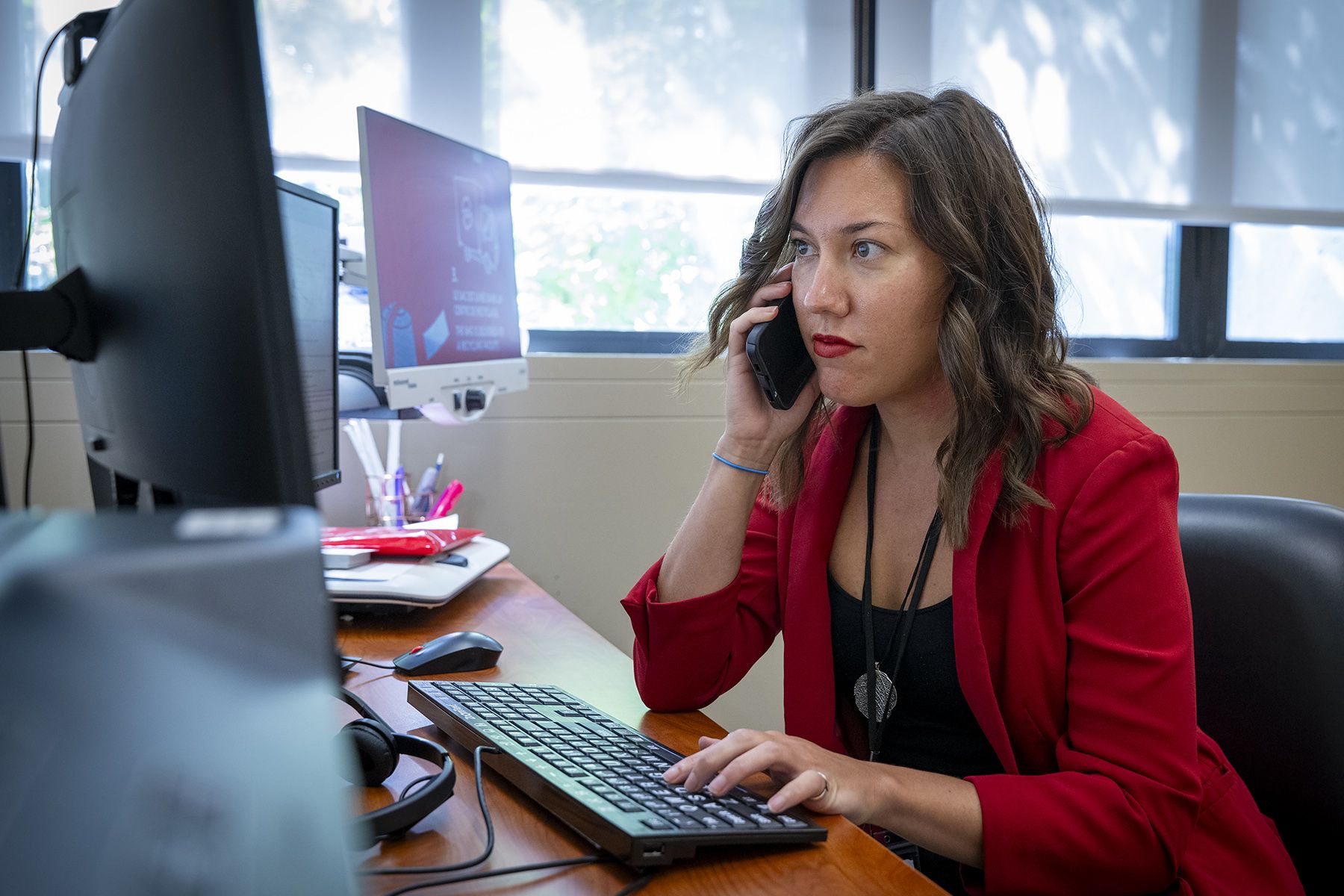
Sarina has learned to navigate life a little differently. While she still has some peripheral vision, she can't see directly in front of her and relies on magnification technology and other accommodations both at work and in daily life. In new places, she sometimes uses a white cane to help her find her way.
At the surf camp, however, she was taught other ways to accommodate for her vision.
Instructors taught students to feel the shape of the surfboard, memorize where their hands and feet belonged, and recognize how different waves would feel beneath them. Coaches used carefully timed verbal cues to signal when to paddle, when to stand and, occasionally, when it was time to jump off.
"It was incredible," says Sarina. "You stop relying on what you can see and start trusting what you can feel. I found surfing challenging enough with the vision I have. Then I'd watch people with no vision at all doing it. Their courage was unbelievable."
A new perspective
The camp brought together people with vision loss from around the world. For the first time in years, Sarina even met several people with the same rare eye condition she has.
"It felt like I was meeting people living my own experience," she says. "That was incredibly meaningful."
She also met adaptive surfers with a wide range of abilities, including people in wheelchairs who surfed using modified boards supported by teams of trained instructors. Watching them changed the way she thinks about challenges.
"It gave me a completely different perspective," she says. "No hurdle is too big. Watching what everyone accomplished made me realize that so much more is possible than we often believe."
Rather than worrying about what the future progression of her vision loss might bring, she returned home feeling hopeful.
"These were people living lives full of adventure, joy and confidence. It reminded me that whatever happens, life doesn't stop."
Bringing her whole self to work

Many people who work alongside Sarina don't immediately realize she is legally blind.
Over the years, KHSC has provided the accommodations she needs—from assistive technology to practical workplace supports—allowing her to continue leading complex hospital operations that help keep patients moving safely through the health-care system.
"There are so many people working at KHSC with different abilities that you may never know about," she says. "People contribute in different ways, and with the right support, we can do incredible things."
When Sarina first moved into a leadership role at KHSC, she made the brave decision to send a note to all of her colleagues to share about her vision loss. She wanted people to know that if they saw her in the hallway and she didn’t say hello, she wasn’t being rude, she just likely hadn’t seen them. The response was overwhelmingly positive and even inspired another employee to speak more openly about their own vision loss.
"It's a reminder that sometimes being vulnerable gives other people permission to do the same," she says.
Looking back, Sarina doesn't talk about surfing as a one-time achievement. Instead, she talks about the people she met, the barriers they refused to let define them, and the confidence she brought home with her.
The experience reminded her that courage isn't always just about overcoming your fears. Sometimes, it's about trusting yourself enough to ride the next wave.