

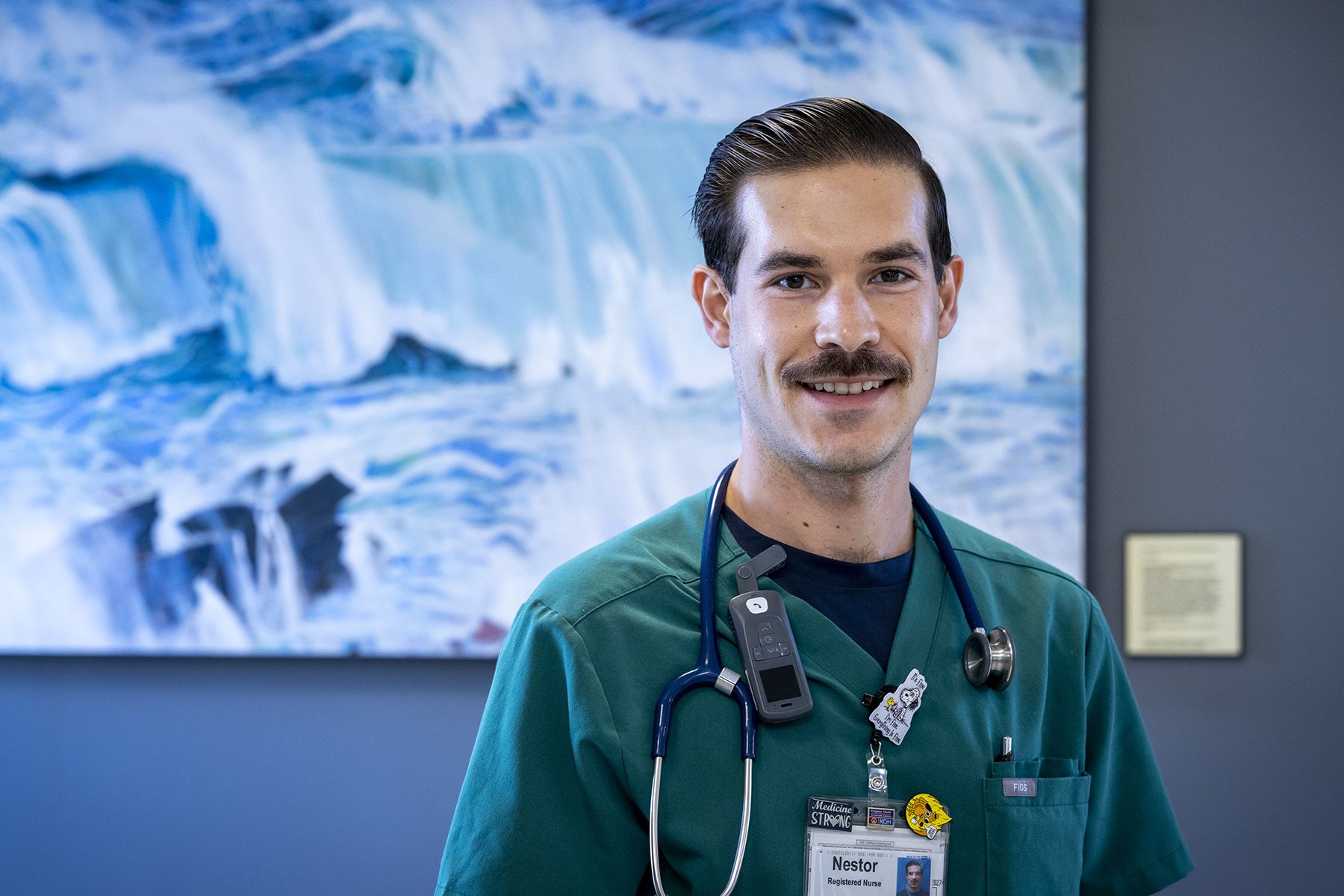
Registered nurse Nestor Grandal's belief in doing simple acts of kindness influences how he approaches his work.
Credit
Matthew Manor
Nestor Grandal’s desire to become a nurse was sparked when he was moving patients, equipment and medical supplies throughout Kingston Health Sciences Centre (KHSC) as a porter.
It’s a career path few nurses take, but he says it gave him a unique opportunity to observe nursing and work alongside the care teams on nearly every unit of KHSC’s Kingston General Hospital site.
“I firmly believe the insight I gained allowed me to become a better nurse than I would have been had I never experienced the hospital through the lens of a porter,” says Grandal. “There are certain things that porters can do to make the lives of nursing staff much easier and vice versa, which are not always a given if you don’t have that other group’s perspective.”
Not to mention, he has a very detailed mental map of the hospital, having explored every corner as a porter.
I give very good directions when patients, visitors, or even colleagues need help finding their way.
It’s been almost six years since Grandal first joined KHSC. His first role was access control screener during the COVID pandemic before becoming a porter. He then went to nursing school and has been a registered nurse on Connell 3 for over two years, sharing positivity and his relaxed nature with all those around him.
“To me, being a good nurse is not only about providing medical care, but also making patients feel respected and cared for by doing simple acts of kindness like starting every assessment by asking them how their day or night was.
“This may seem mundane, but I can tell people appreciate it because it gives them space to express themselves and makes them feel valued rather than just another person in a hospital bed.
“I often recall a saying from nursing school: ‘Patients may forget what you said or did, but they will remember how you made them feel.’”
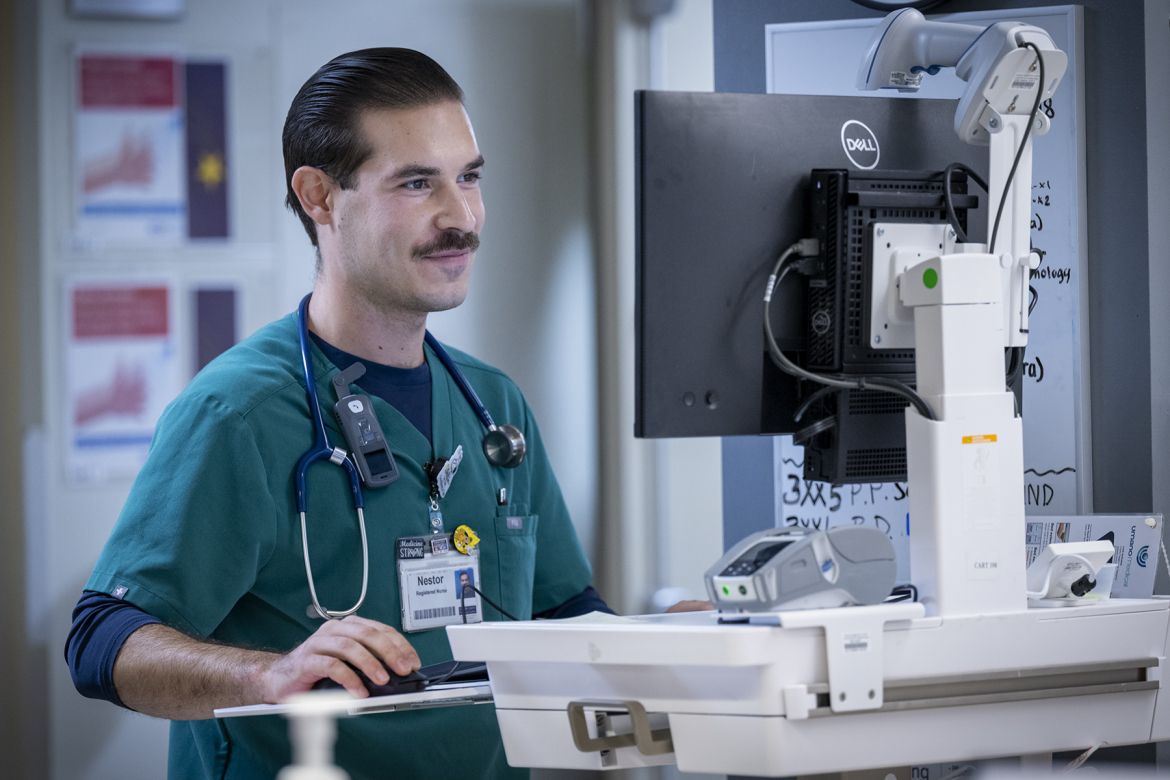
A calming presence in the unit
Colleagues and patients alike have noticed something about Grandal: he puts people at ease. The first time a patient said so, he was about two months into his career, caring for someone who was known to be difficult at times. “Nestor, can I tell you something?” the patient asked. “I momentarily feared what they were about to say,” recalls Grandal. Instead, the patient told him, “You’ve got a very nice, relaxing presence.”
“I remember the patient noted how they found my mannerisms and deep voice to be soothing, which completely blindsided me because I hadn’t done anything out of the ordinary.
“Every time I’ve received this kind of feedback since, it never fails to take me by surprise and fills me with joy knowing I am able to reduce people’s anxiety with my presence.”
It’s not a characteristic he works to develop; it just comes natural to him.
Three traits that matter
When Grandal is asked about the traits necessary to be a nurse, he doesn’t jump to what is often said: empathy and critical thinking. While they are important, he highlights communication, adaptivity and emotional resilience.
Good communication is something he believes has the potential to improve patient outcomes. “When we promptly share accurate information among care team members, we can more easily coordinate care and advocate for patients because we are on the same page. Equally important, communicating with patients in a kind, respectful and understanding way can help patients feel comfortable and safe in an unfamiliar environment.”
On adaptability, he adds: “Every single patient is different, and no two shifts are exactly alike. Being adaptable and able to adjust your approach allows nurses to deliver person-centred care and keep learning on the job.”
When it comes to successfully managing emotions in tough situations, he says that “remaining calm and focused is key to a nurse’s ability to maintain their overall wellbeing and preserve their ability to continue providing the best possible care for patients.”
The hardest and best parts
Grandal leans on his emotional resilience during the hardest part of the job, which is experiencing death.
“No matter how little you may have known the person before they passed, it brings up solemn thoughts and emotions. My mind will often wander to contemplate what the person might have been like in their earlier years and the experiences they may have had throughout their lives.
It can also be difficult and elicit a truly gut-wrenching feeling when family and friends are present and you see them grieving their loved one.
The rewards are plentiful, though. He mentions the smiles and gratitude patients express after he has helped them feel more comfortable. He also loves when patients are getting set to go home. “It elicits a great feeling when patients leave our unit waving and smiling while bidding us all farewell because we know how happy they are to be returning to their pets, typical routines, or sleep in their own beds.”
Working with the dedicated, supportive and competent Connell 3 team is another bright spot Grandal never takes for granted. At the heart of that experience is manager Eric Geen, who inspires him to put his best foot forward.
“Eric recognizes hard work, listens to concerns and encourages us to take advantage of opportunities for professional growth. His genuine caring is palpable, and that makes me feel motivated, confident and passionate about the care I provide.”
Grandal passes that same sense of being cared for on to every patient. They may not remember him getting them a glass of water, but they’ll remember how he made them feel: valued, not just another room number.
Explore careers at KHSC
We'd love to have you join the team that is transforming care together. Visit our job board to see the internal and external opportunities available at our sites.


