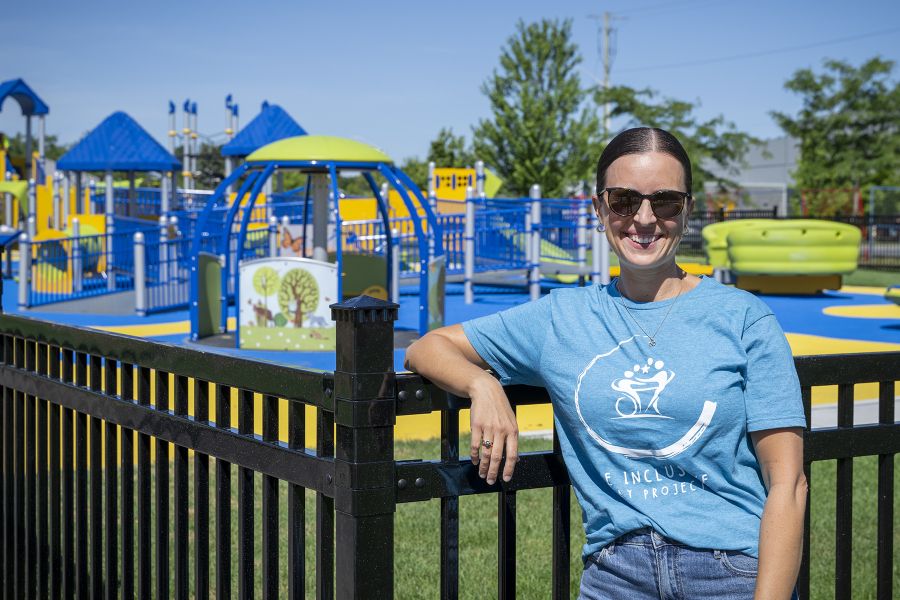

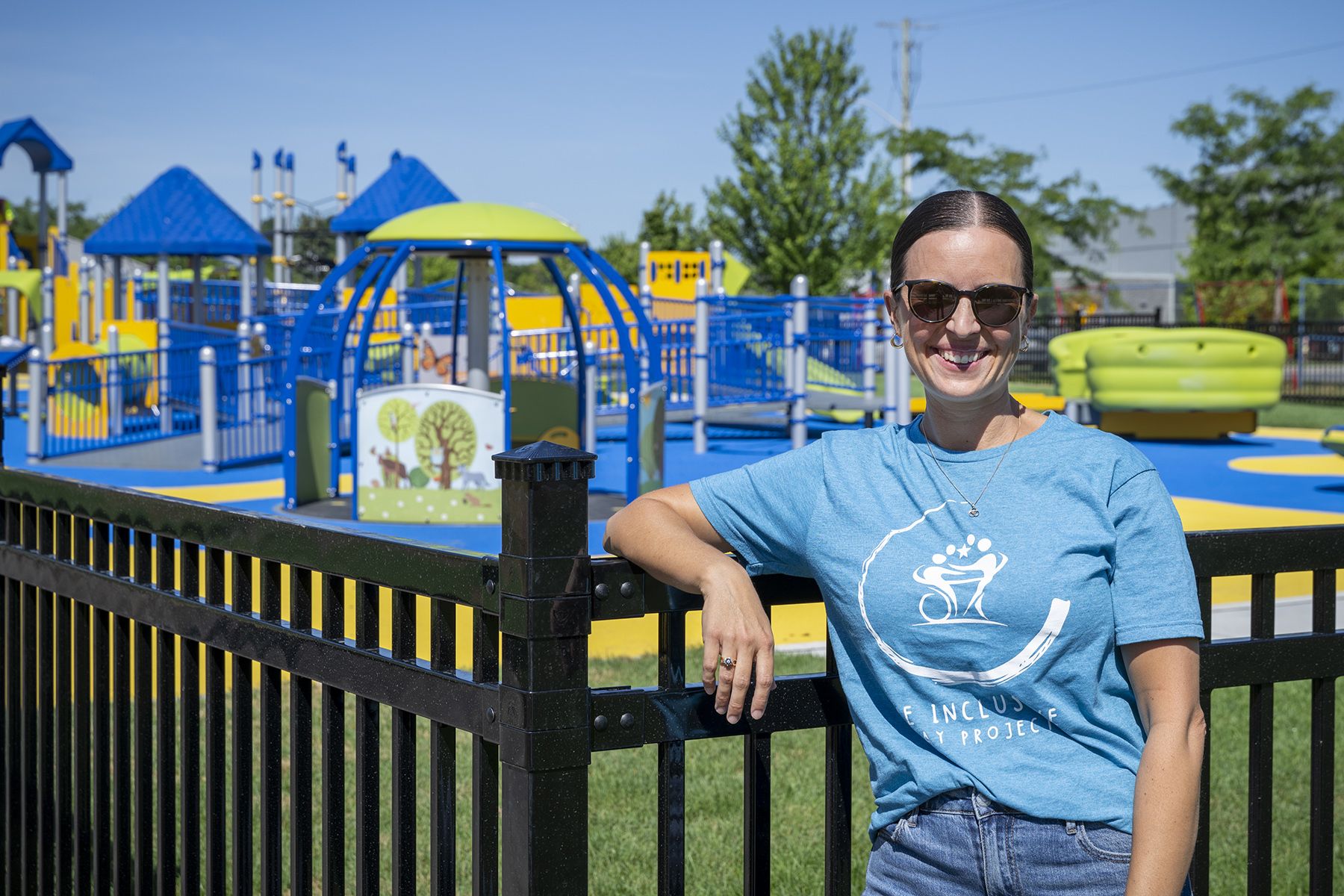
For Rachel Doornekamp, helping children participate fully in the world isn't just part of her job—it's something that shapes how she sees her community.
As an occupational therapist with KidsInclusive at Kingston Health Sciences Centre (KHSC), Rachel has spent more than 16 years supporting children with complex special needs. Every day, she helps remove barriers that make everyday activities—from attending school to getting around at home—more accessible.
But a family vacation a few years ago sparked an idea that would grow far beyond her workday. While visiting Prince Edward Island, Rachel discovered a fully inclusive playground unlike anything she had ever seen.
"I remember turning to my husband and saying, 'Kingston needs one of these.”
That conversation eventually became the Inclusive Play Project—a volunteer-led community initiative that Rachel helped launch to bring Kingston's first fully inclusive playground to life.
After raising more than $1.5 million through grants, businesses, schools and community supporters, the playground at Shannon Park officially opened this summer.
For Rachel, the project has always been about much more than just building a playground.
"It really became a movement," she says. "We started talking about what inclusive play actually means in our community."
As an occupational therapist, Rachel has long helped families navigate accessibility challenges inside their homes, schools and communities. Through the Inclusive Play Project, she realized that play—a fundamental part of childhood—was another barrier many families quietly faced.
She remembers speaking with parents of teenagers who had never experienced a playground because none were accessible.
"For some people, it's just a playground," she says. "For these kids, it might be their very first time participating in this kind of play."
A commitment to participation and inclusion is at the heart of occupational therapy.
Whether it is recommending adaptive equipment, helping families access specialized vehicles, finding classroom support or identifying ways children can participate more fully in everyday life, Rachel says the goal is always the same: making the world easier to navigate.
"We're helping remove barriers so people can participate in the things that matter most to them."
Although the Inclusive Play Project is a separate community initiative outside of her role at KidsInclusive, many of her colleagues volunteered their own time because they believed in its vision. Families receiving care also became advocates, sharing their stories, fundraising and helping educate others about the importance of inclusive play.
To Rachel, that generosity reflects the culture she experiences every day at KidsInclusive.
"It really feels like a family," she says. "The staff are incredible, and the families we work with are truly warriors. They face barriers every day with so much grace, and it's inspiring to be able to support them."
The project has also created ripple effects beyond the playground itself. It helped spark new conversations about accessibility across Kingston, contributing to the City of Kingston's plans to improve parks and inspiring schools and community organizations to rethink what inclusion looks like.
For Rachel, the nearly completed playground represents far more than swings and slides.
It's a place where children can play together regardless of ability. Where families who have spent years planning outings around barriers can simply enjoy an afternoon together. And where every child can make the kinds of childhood memories that so many of us take for granted.