

Credit
Matthew Manor/CSCG
Ten years after their historic final tour, Kingston is pausing this week to remember the legacy of Gord Downie and the impact his journey with glioblastoma had on Canadians from coast to coast. For researchers, physicians, patients and families at Kingston Health Sciences Centre (KHSC) and Queen’s University, the anniversary is an opportunity to reflect on a decade of progress in brain tumour care and neuroscience research, while recognizing the significant challenges that remain.
Downie’s diagnosis of glioblastoma, an aggressive form of brain cancer, helped bring unprecedented public awareness to a disease that continues to be among the most difficult to treat. His openness and courage inspired conversations about brain cancer, research, and the patient experience in communities across the country.
That impact was felt personally and professionally by Dr. D.J. Cook, the neurosurgeon at KHSC who cared for Downie.
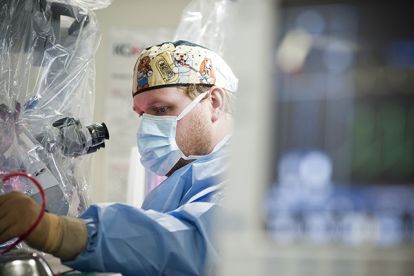
“Gord faced his illness with extraordinary courage and openness,” says Dr. Cook, who is also a professor of neurosurgery at Queen’s. “His willingness to share his experience helped Canadians understand the enormous impact of brain cancer. Ten years later, his influence continues to remind us why progress in this field matters—not simply as a scientific objective, but for patients, families, and communities.”
Over the ensuing decade, advances in imaging, surgical techniques, and scientific research have continued to expand what is possible for patients living with brain cancer. In recent years, the recruitment of Drs. Teresa and Jamie Purzner, neurosurgeons with subspecialty expertise in glioblastoma, has further expanded Kingston's capacity in both clinical care and scientific investigation.
KHSC and Queen's have specifically contributed to efforts to better treat and study glioblastoma through the creation of the Integrative Brain Tumour Program, the adoption of new technology such as Convivo, and the creation of a new surgical capsule tool to support brain cancer research.
In fact, these KHSC teams have received further support from the Federal Government with new funding from the Canadian Institute of Health Research (CIHR).
- Drs. Teresa and Jamie Purzner have received $994,500 to study why glioblastoma tumours recur after they are surgically removed.
- Dr. Cook recently received $1.2 million to study how the brain recovers from a traumatic event, such as a stroke or brain surgery.
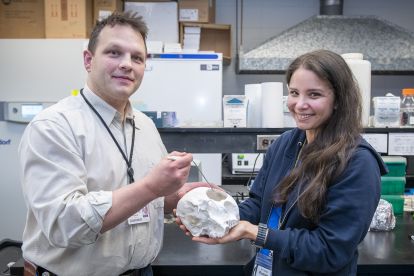
“Building a program of this kind takes time, persistence and a willingness to bring together people with complementary expertise,” says Dr. Cook. “Our goal has been to create an environment where excellent clinical care and meaningful scientific discovery reinforce one another.”
An important part of the growth of Kingston's program has been strengthening partnerships among experts in neurosurgery, medical imaging, neurology, medical oncology, radiation oncology, rehabilitation, and data science. Research trainees, clinical staff, patients, and families have also played an essential role in advancing knowledge and improving care. Not to mention the support of The Tragically Hip themselves, who made a $400,000 donation that supported brain cancer clinical trials within the Canadian Cancer Trials Group headquartered at the Sinclair Cancer Research Institute at Queen's.
“No individual surgeon, scientist or laboratory can solve a problem as complex as glioblastoma,” says Dr. Cook. “Progress depends on building teams that can connect what we see in the operating room with discoveries in science. Our strength at KHSC and Queen’s is our ability to work across those boundaries.”
The goal is to provide each patient with the safest and most effective treatment possible, while continuing to generate knowledge that may improve care for future patients. For Cook, the tenth anniversary of the Hip’s final tour is both a moment of remembrance and an opportunity to look forward.
“Gord taught us a great deal about purpose, resilience and the responsibility to use whatever platform we have to improve the lives of others. The progress we’ve made over the past decade reflects a collective commitment. We have built considerable momentum, but our work is far from finished.”

To help recognize Downie and The Tragically Hip's lasting impact on local healthcare, the University Hospitals Kingston Foundation has sponsored a guitar sculpture designed by a local artist as part of the Play Me Kingston public art project. It can be found on Montreal Street outside of KHSC's Hotel Dieu Hospital site. To learn more about the sculpture or support KHSC's work, visit the UHKF's website.